Value pick
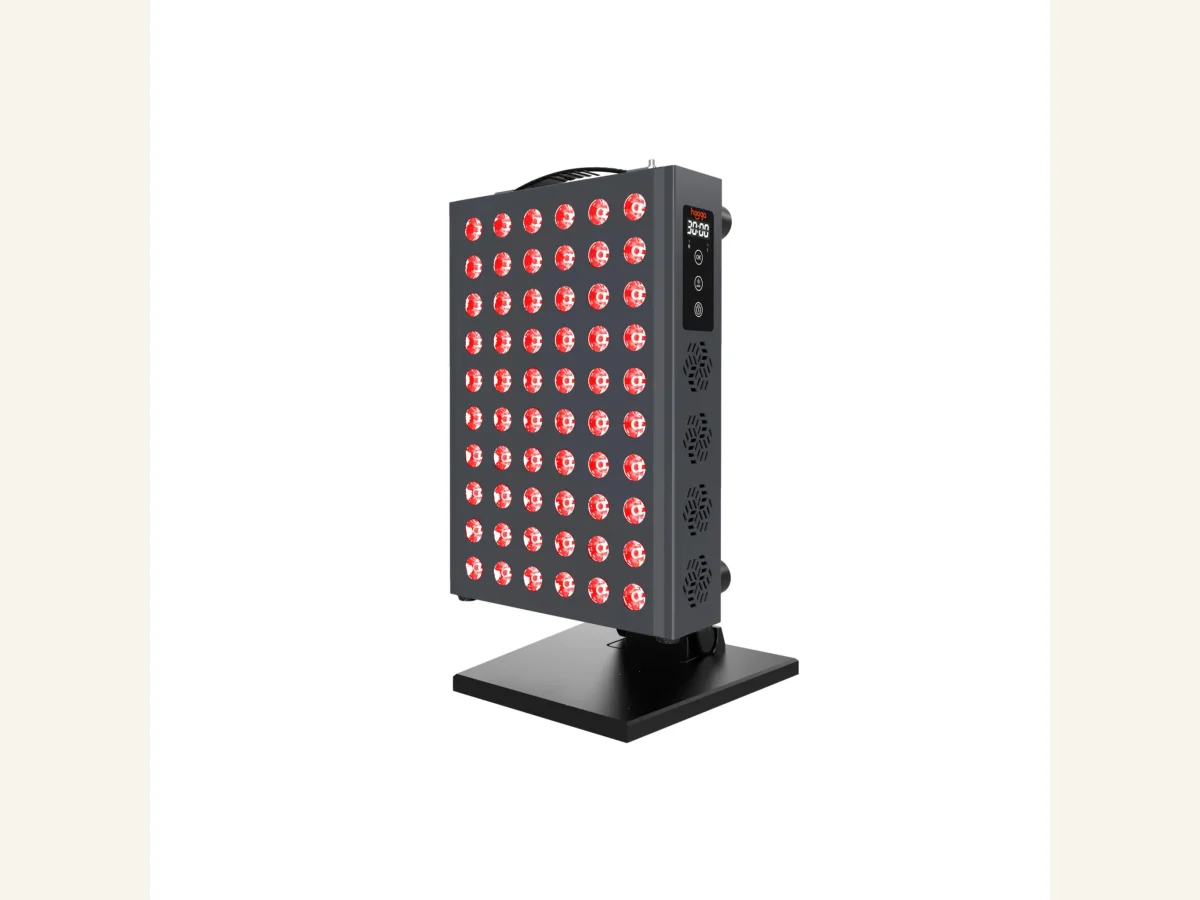
Hooga PRO300
~$299The cleanest first panel for most people: dual 660/850nm, published output, 3-year warranty and a 60-day trial.
Buying guide · Best / compare / buy
A red light panel can be a rational first device. The mistake is buying glow by the square foot. The decision is narrower: measured dose at the distance you will actually use, a warranty with a real company behind it, and one body part the panel is meant to treat.
Disclosure: the HigherDOSE full-body kit link in this guide is an affiliate link, so Agewell may earn a commission if you buy. It did not change the verdict: Hooga remains the value pick and PlatinumLED remains the full-body panel pick. How affiliate links work.
For most buyers, start with a measured desk or half-body panel before buying a wall of LEDs; Hooga is the value pick, PlatinumLED is the high-output pick, and any brand that will not state distance, wavelength and measurement method goes on the discard pile. Across six panels checked October 19, 2026, every one reads 25 to 60 percent below its advertised irradiance once measured independently or against its own spectrometer figure.
Buy it for skin, hair or one stubborn pain spot. Do not buy it for testosterone, thyroid, fat loss or the fantasy that red light turns a bad protocol into a good one.
The cleanest first panel for most people: dual 660/850nm, published output, 3-year warranty and a 60-day trial.
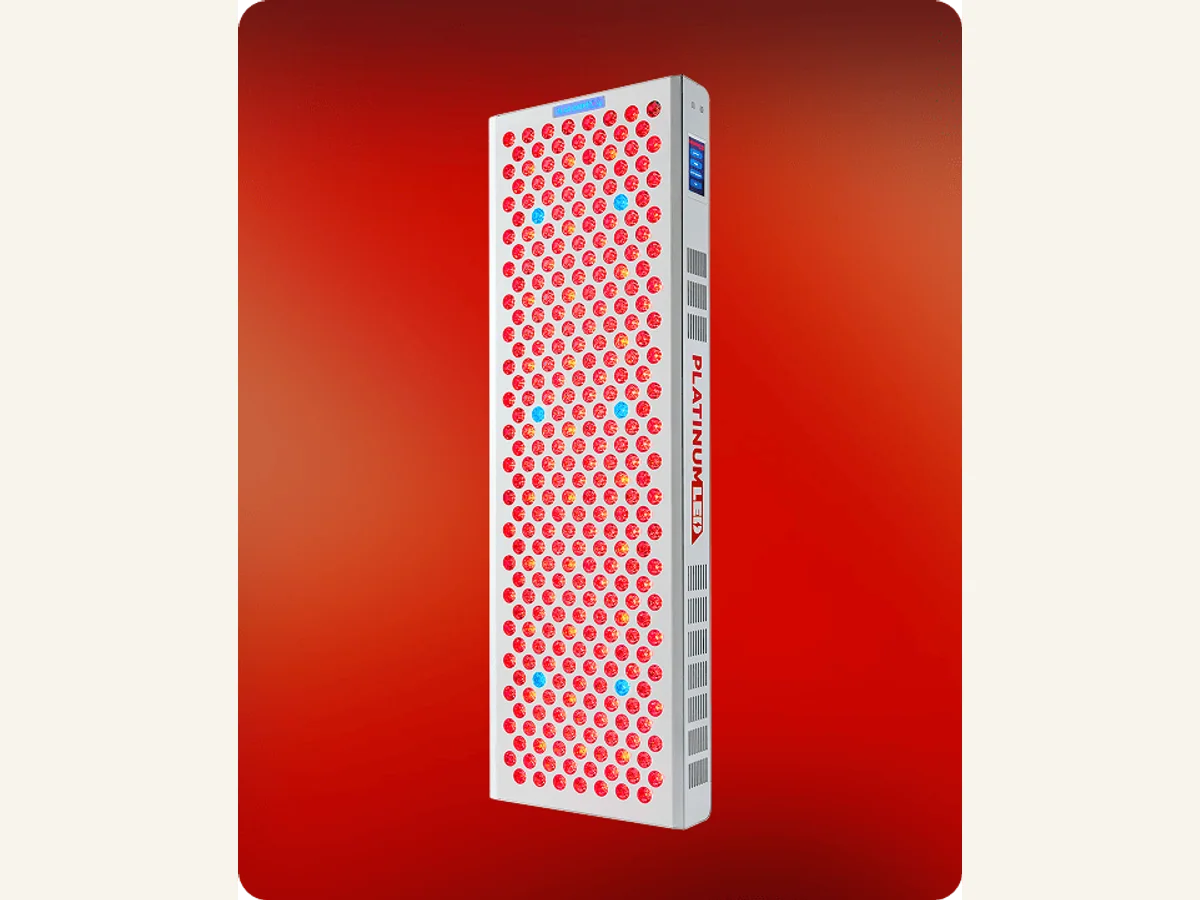
Higher-output, modular and serious. Worth it when you want torso/leg coverage and have a place to mount it.
The included 78.7 by 41.37-inch mat uses 660/850nm light, 1,000 LEDs and a brand-stated 90 mW/cm². It stores more easily than a panel and has a 120-day return window, but no independent spectrometer result was found, and the oil and cleaner do not improve the light dose.
Affiliate link. We may earn a commission; the relationship does not change this pick or its caveats.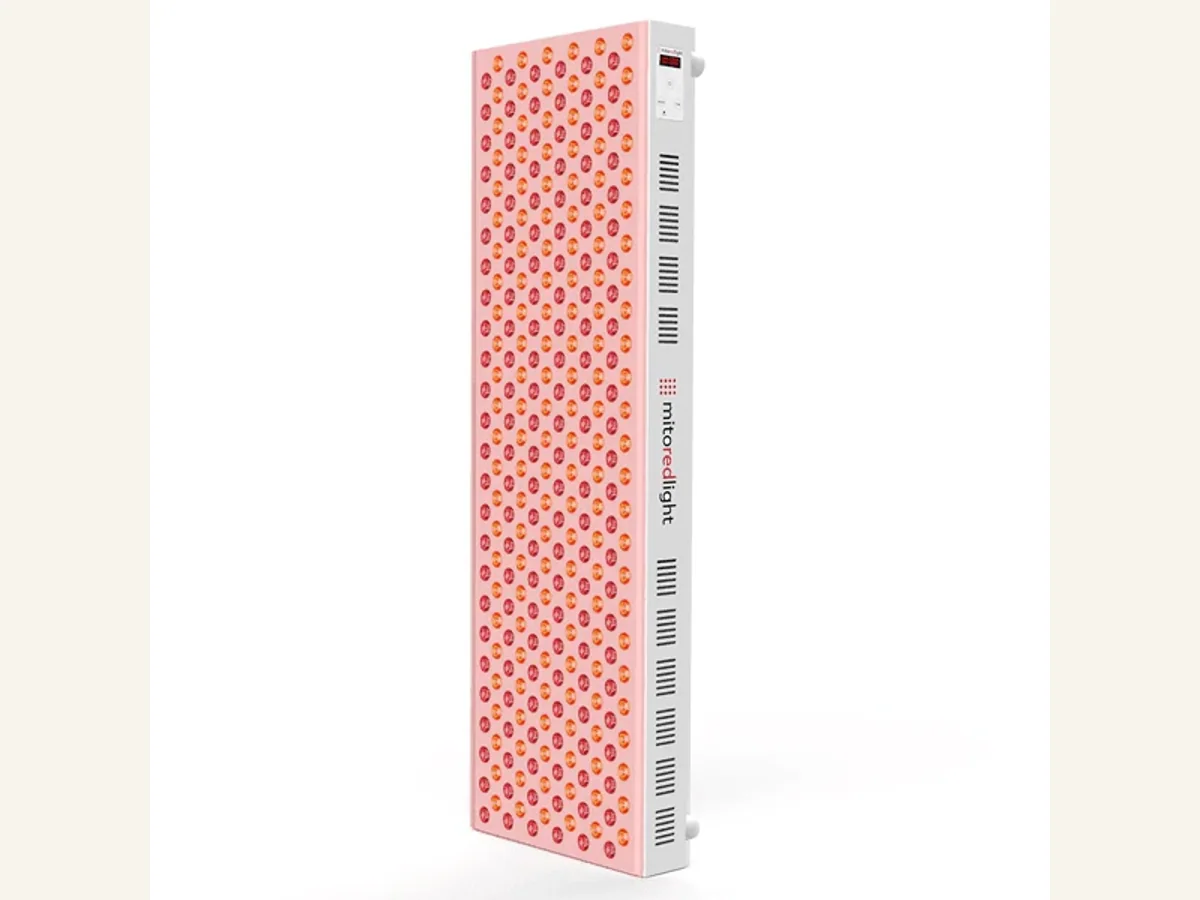
One of only two panels in this guide whose own product page prints the solar-meter number next to the spectroradiometer number: advertised ">165 mW/cm²", lab figure ">74". Two-year warranty is shorter than its full-body peers, and it skips the extra wavelengths Platinum and Block Blue Light add.
Do not start with the largest panel. Start with the use case: face, scalp, one joint, torso, or full body. If the target is face or a single injury site, a smaller panel used daily beats a full-body rig that becomes furniture.
The number to distrust is advertised irradiance without a measurement method. A solar meter can make LED panels look far stronger than a spectrometer would. Treat the big number as marketing unless the brand states distance, tool and protocol.
Pay for known wavelengths, reasonable output at six to twelve inches, low flicker, low EMF at use distance, a real return window and a company likely to answer warranty email in year two.
Do not pay extra for a dozen wavelengths if the brand cannot explain dose. The useful consumer lane is still mostly red and near-infrared light, used consistently and close enough to deliver a meaningful dose.
Every figure below comes from each brand’s own current product page, checked October 19, 2026, cross-referenced against Light Therapy Insiders’ independent spectrometer testing where a third-party result exists. All distances are six inches, the figure nearly every brand anchors its marketing to. A solar meter reads the full light spectrum and typically prints two to three times higher than a spectroradiometer isolating the therapeutic wavelengths; treat any irradiance claim without a stated instrument as the solar-meter number until proven otherwise.
Usable area is each panel’s own stated face dimensions, not a measured treatment radius: a bigger panel still only delivers full dose within roughly its own width, and less than that at the edges.
| Model | Measured @ 6" | Advertised @ 6" | Usable area | Wavelengths | Warranty | Return window | Street price |
|---|---|---|---|---|---|---|---|
| Hooga HG300 | ~55 (independent spectrometer) | 73 (brand-stated) | ~100 in² (12.2×8.2") | 660 + 850nm | 3 yr | 60 days, return shipping deducted | $199 |
| Hooga PRO300 | 50-65 peak/avg (independent spectrometer) | >109 (brand-stated) | ~109 in² (12.7×8.6") | 660 + 850nm | 3 yr | 60 days, return shipping deducted | $299 |
| PlatinumLED BIOMAX 900 | ~90 (independent spectrometer) | 185 (brand-stated) | ~423 in² (35.83×11.81") | 630-1060nm, 7-wave | 3 yr | 60 days, minus return freight and a 20% restocking fee | $1,299 |
| Block Blue Light PowerPanel MEGA | 89 (brand-published spectrometer) | 167 (brand-published solar meter) | ~427 in² (36.2×11.8") | 590-1060nm, 7-wave | 5 yr | 30 days | $1,499.95 |
| Mito Red Light MitoMEGA 2.0 | >74 (brand-published spectroradiometer) | >165 (brand-published solar meter) | ~432 in² (36×12") | 660 + 850nm | 2 yr | 60 days, money-back | $1,049 |
| BON CHARGE Super Max | No independent test found for this model | >162 (brand-stated; no distance or instrument given) | ~419 in² (35.5×11.8") | 660 + 850nm | 1 yr | 30 days | $1,599 |
Skip if you expect systemic longevity from a panel. The defensible claims are narrower: skin, hair and localized recovery/pain. If the sales page leads with fat loss, testosterone or thyroid language, read that as a credibility tax.
A mid-size dual-wavelength panel with clear specs and a real warranty is the right first buy. Hooga PRO300 is the current value pick; full-body buyers can justify PlatinumLED if they will use the larger coverage.
Not by itself. Of the six panels we checked, every one reads lower under independent or brand-disclosed spectrometer testing than its headline number, by 25 to 60 percent. Compare the measured figure at a stated distance, not the number on the box.
PlatinumLED BIOMAX 900 advertises 185 mW/cm² at six inches; independent spectrometer testing measures roughly 90, about half. Hooga’s panels show a smaller gap, and Mito Red Light and Block Blue Light both publish their own spectrometer figure alongside the bigger solar-meter number rather than leading with the inflated one.
Not generally. A mat is easier to store and can give close-contact coverage, while a panel is easier to position at a repeatable distance and has more independent measurement data. Buy the mat for form factor, not because bundle extras improve the dose.
By David Persson · Updated 2026-10-19 · Corrections: hi@agewell.guide
The Agewell Briefing
A sourced weekly read on longevity products, clinics and research, with a clear answer on what is worth trying.
One email a week. Unsubscribe with one click.